HR community: how to build a networking community for HR professionals
7 min read

Written by Borja MartosCMO & Co-Founder
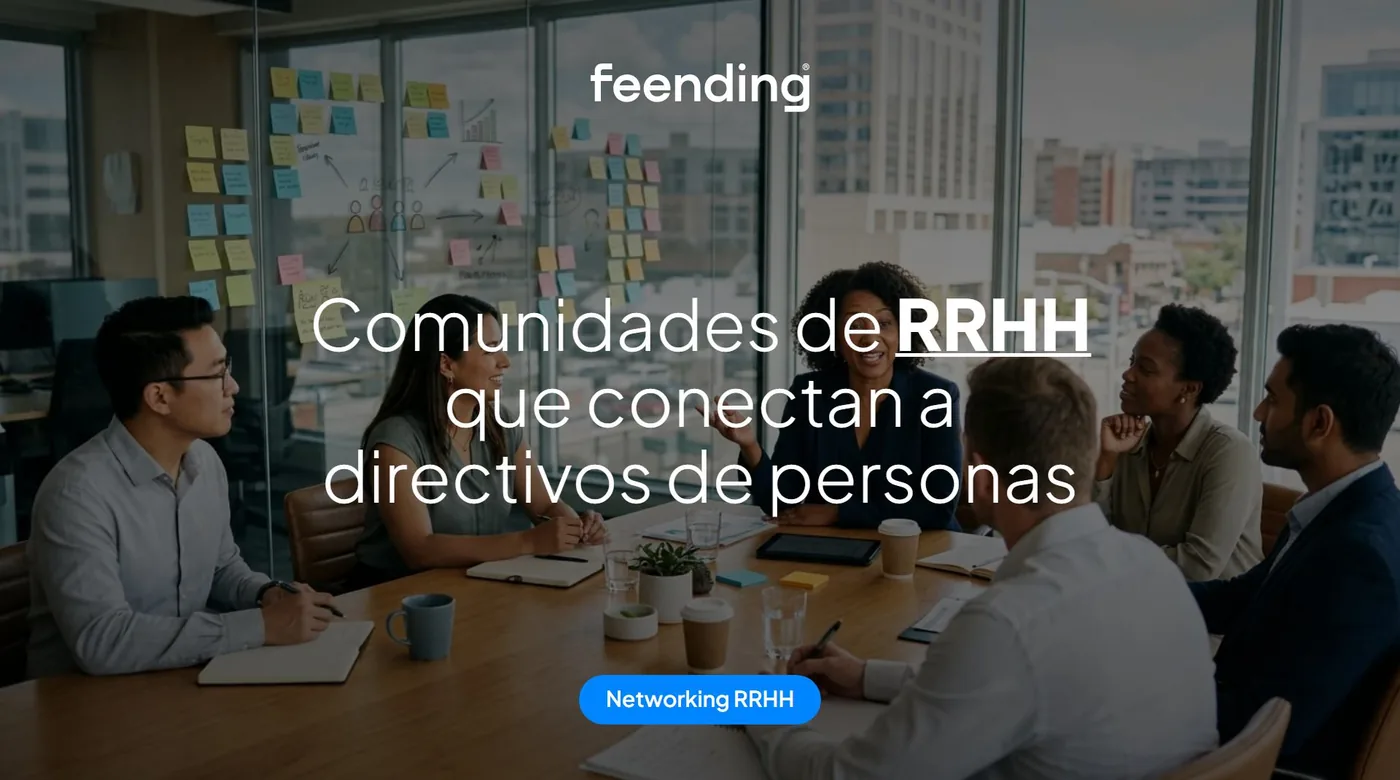
An HR community is a private network where HR directors and people professionals share challenges, compare practices and meet with a purpose: solving talent, training or vendor problems with help from peers. To work, it needs a clear value proposition, well-segmented members, meetings with real substance and networking that does not depend on chance.
People who lead HR teams tend to share one need: knowing what others are doing about a problem similar to theirs. That is why they look for an HR community. In this guide you will see who builds them, what members expect, why LinkedIn and WhatsApp groups fall short and how to build a networking community for HR professionals in five steps.
What is an HR community?
It is a stable group of people professionals who stay in touch over time, not just at a one-off event. What sets it apart from a contact list is that someone looks after it: deciding who gets in, what is shared and how members connect with each other.
In practice it combines three things: meetings (in person or online), peer conversations and a space where members can find each other whenever they need to. When one of the three is missing, the community turns into an events calendar or a chat nobody reads.
Who builds HR communities?
Very different organizations build them, each for its own reasons.
1/ Associations of people leaders. In Spain, for example, AEDRH (the Spanish Association of HR Directors) describes itself as a non-profit founded in 2012 to strengthen the HR leadership role. DCH (International Organization of Human Capital Executives) brings together human capital leaders with chapters across Europe and the Americas and runs meetings, studies and mentoring. AEDIPE works through regional branches and holds an annual congress. Most countries have similar bodies.
2/ General executive associations. Spain's APD presents itself as a community of executives focused on training, networking and knowledge, with a dedicated HR and employment area.
3/ Business schools and universities. They keep the graduates of their HR programs together so the relationship continues after the master's degree.
4/ Consultancies and HR software vendors. They gather their customers so they can swap experiences, learn from each other and feed ideas back into the product.
5/ HR departments of large groups. They connect people leaders across subsidiaries or countries so they stop working in silos.
What do members of an HR community look for?
They look for practical answers to real problems, not more content. Five reasons come up again and again.
1/ Benchmarking. Learning how companies of a similar size and sector handle pay, remote work or performance reviews.
2/ Sharing challenges. Talking to someone who has already been through layoffs, a merger or a software rollout, without having to discuss it in public.
3/ Talent. Finding candidates, references or partners for hiring projects.
4/ Learning. Keeping up with fast-moving topics such as employment law or the use of AI in people management.
5/ Vendors. Asking peers for an honest opinion before signing up a consultancy, a tool or a service.
Why do LinkedIn and WhatsApp groups fall short?
They fall short because they are good for talking, but not for connecting or managing. A LinkedIn group is open, mixes your members with strangers and lets the algorithm decide what gets seen. On sensitive people topics, nobody posts in the open.
WhatsApp has the opposite problem: it is private, but once the group passes 30 or 40 people messages get lost, newcomers do not know anyone and the organizer cannot tell who takes part or what value each member gets. We explain this in detail in why running communities on WhatsApp ends up being a problem.
Neither keeps a profile of each member, suggests who to meet or measures anything. In a community of HR directors, where everyone is short on time, that is the difference between a network people use and one they quietly leave.
How do you build an HR community in 5 steps?
You build it with a method, not an open group and hope.
1/ Define the value proposition. Say in one sentence what an HR leader gains by joining: access to peers, benchmarking, learning, opportunities. If you cannot explain it, your members will not be able to either.
2/ Segment by sector and company size. The HR manager of a small manufacturer and the CHRO of a multinational face different challenges. Organize members by sector, headcount, role and topics of interest. That information underpins everything else.
3/ Run meetings and working groups. Mix larger events with small round tables of 8 to 12 people on a specific topic: pay, wellbeing, AI in HR. Small tables are where trust is built.
4/ Switch on AI-guided networking. No organizer can personally introduce hundreds of professionals. A platform with artificial intelligence analyzes each member's profile and activity and suggests who to meet for their goal: sharing a challenge, finding a mentor or hiring. We cover it in how smart networking works in professional communities.
5/ Measure. Without data, a community runs on gut feeling. The next section sums up what to track.
If you want to go deeper into keeping the community active after launch, the engagement guide in the Feending Method walks through it step by step.
What should you measure in an HR community?
You should measure whether the community creates relationships and value, not just how many people sign up. Five indicators are enough to start.
1/ Active members. The share who log in, take part or attend in a given period.
2/ Connections made. How many introductions happen and how many turn into a conversation.
3/ Attendance at meetings and round tables. Who comes, who returns and who stopped coming.
4/ Perceived value. One short question after each meeting: was it useful?
5/ Renewal or retention. If there is a fee, how many renew; if not, how many are still active a year later.
There is a full guide in how to measure the impact of a professional community.
What platform does an HR community need?
It needs a private platform, branded by the organizer, that brings members, communication, events and networking together in one place. That is the difference between an open network and a space of your own, as we explain in our guide to networking platforms.
Feending is a private, one-of-a-kind platform for each community, with its own web and app. It works for the manager and for the member: the manager has the database, events, fees and activity in a single dashboard; each member gets relevant contact suggestions across five dynamics: networking, mentoring, sales, investment and hiring.
If you are an association, a club or a school bringing HR professionals together, Feending HUB is the fit. If you are a company, a consultancy or a vendor that wants to connect its people teams or its customers, Feending BUSINESS is the fit. The logic is the same as in a business club: Levante UD moved the management of nearly 400 companies from spreadsheets to Feending, as its case study shows.
Frequently asked questions
What is an HR community?
It is a private network of HR directors and professionals who stay in touch over time to share challenges, compare practices, keep learning and find talent or vendors with help from their peers.
How do HR professionals network effectively?
By joining a peer community with small topic-based meetings and using a platform that suggests who to meet based on sector, company size and goal, instead of waiting to bump into the right person at an event.
Is a WhatsApp group enough for an HR community?
It works for a handful of people. As the group grows, messages get lost, newcomers know nobody and the organizer cannot measure anything; that is the moment to move to a platform of your own.
Who should run an HR networking community?
Anyone with a clear reason to bring HR professionals together: associations of people leaders, business schools, consultancies and HR software vendors, or the HR department of a large group with several subsidiaries.
Connect your HR community
If you want the people professionals in your network to truly get to know and help each other, Feending is the private, one-of-a-kind platform for your community. Request a free demo.