The Feending MethodGuide 4
Engagement: keeping the community alive once the enthusiasm fades
8 min read
Engagement is the third block of the Feending Method: activating members and keeping the community moving once the initial push fades. It rests on five levers — content with value, networking with intent, events, training and mentoring, and shared resources — and its measure of success is not how much activity there is, but how much of it members themselves start.
A community without activity goes cold. And a community that goes cold ends up disappearing, however good the idea behind it and however well its purpose was communicated. That is not enough: for a community to be useful, attractive and sustainable it needs constant movement, interaction, real opportunities and reasons to come back.
This is where engagement comes in, the block of the Feending Method that turns an "existing" community into a living one. It is also the block where the difference between an audience and a community shows most: in the first, the manager does the energising; in the second, the members do.
What is engagement within the Feending Method?
It is creating dynamics that bring real value and turn participation into something useful, relevant and desirable. It is not generating activity for its own sake, nor saturating people with meaningless content.
A well-engaged community is one where things happen, connections are made, opportunities are created and members feel it is "worth being here". The method starts from one premise: engagement works when there is value. If there isn't, no amount of posting replaces it.
What are the five levers of engagement?
Valuable content on the wall, intelligent networking, events, training and mentoring, and shared resources. Each activates a different kind of participation, and a healthy community uses several at once.
1. Publish valuable content on the wall
The first step to keeping a community active is sharing information that is relevant and useful to its members: not just any content, but content aligned with the purpose and with each profile's interests. Specialised articles, interviews, success stories, tutorials, practical resources, reports. It goes on the wall or into repository folders, and it is segmented so that each person gets what interests them without being swamped. It is what gives a member a reason to drop by the platform between one event and the next.
2. Activate intelligent networking
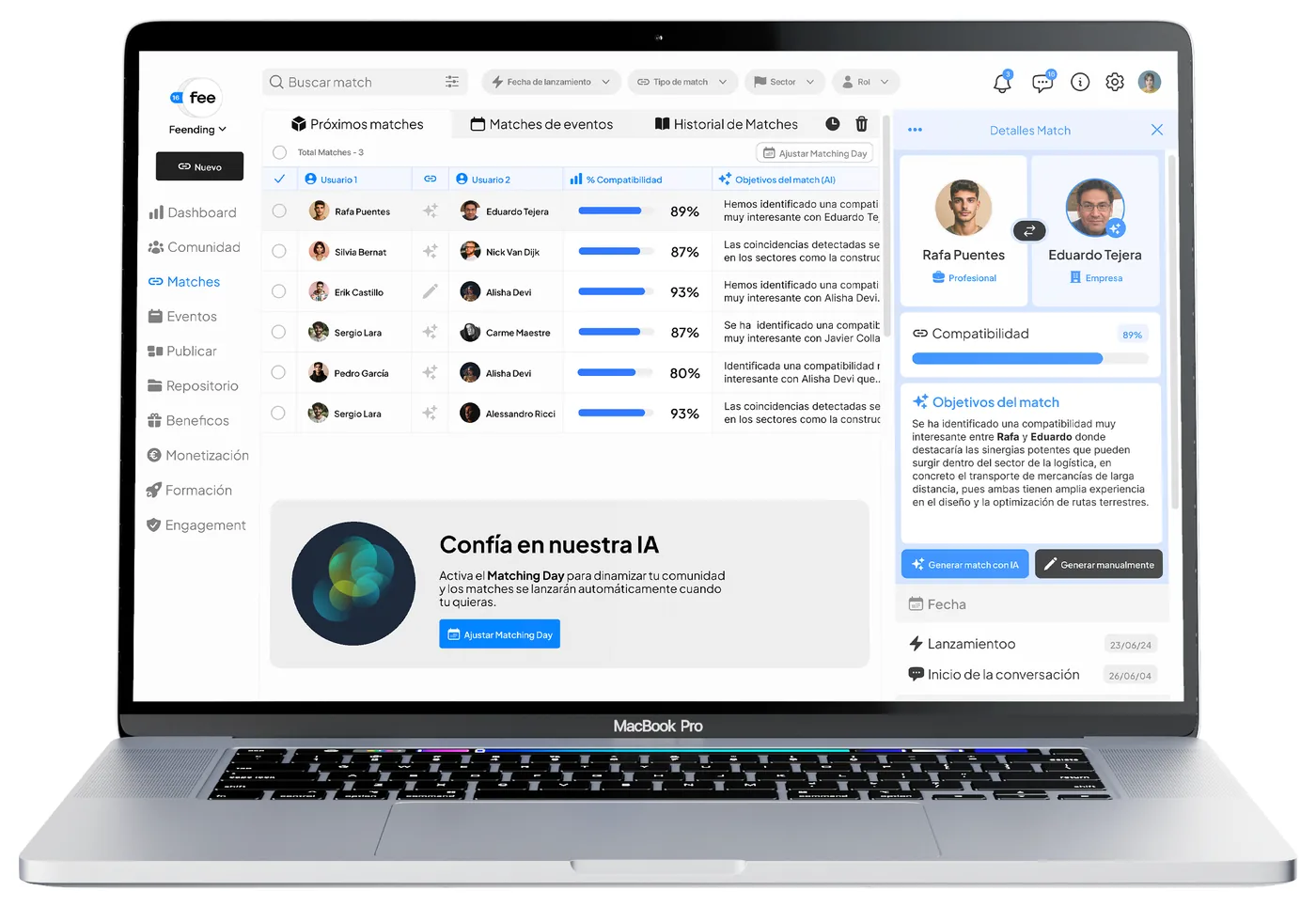
The big difference between a passive community and a dynamic one lies in the quality of the connections it produces. Feending includes engagement modules with matchmaking, which connect members by interests, goals or compatible profiles: it is not random networking, it is networking with intent. Connections can be aimed at professional networking, mentoring, jobs, investment, collaborations or even leisure. Feeling part of a community only happens through the personal relationships created in it; when people connect with intent and affinity, the community stops being an information space and becomes a generator of belonging.
3. Organise events and shared experiences
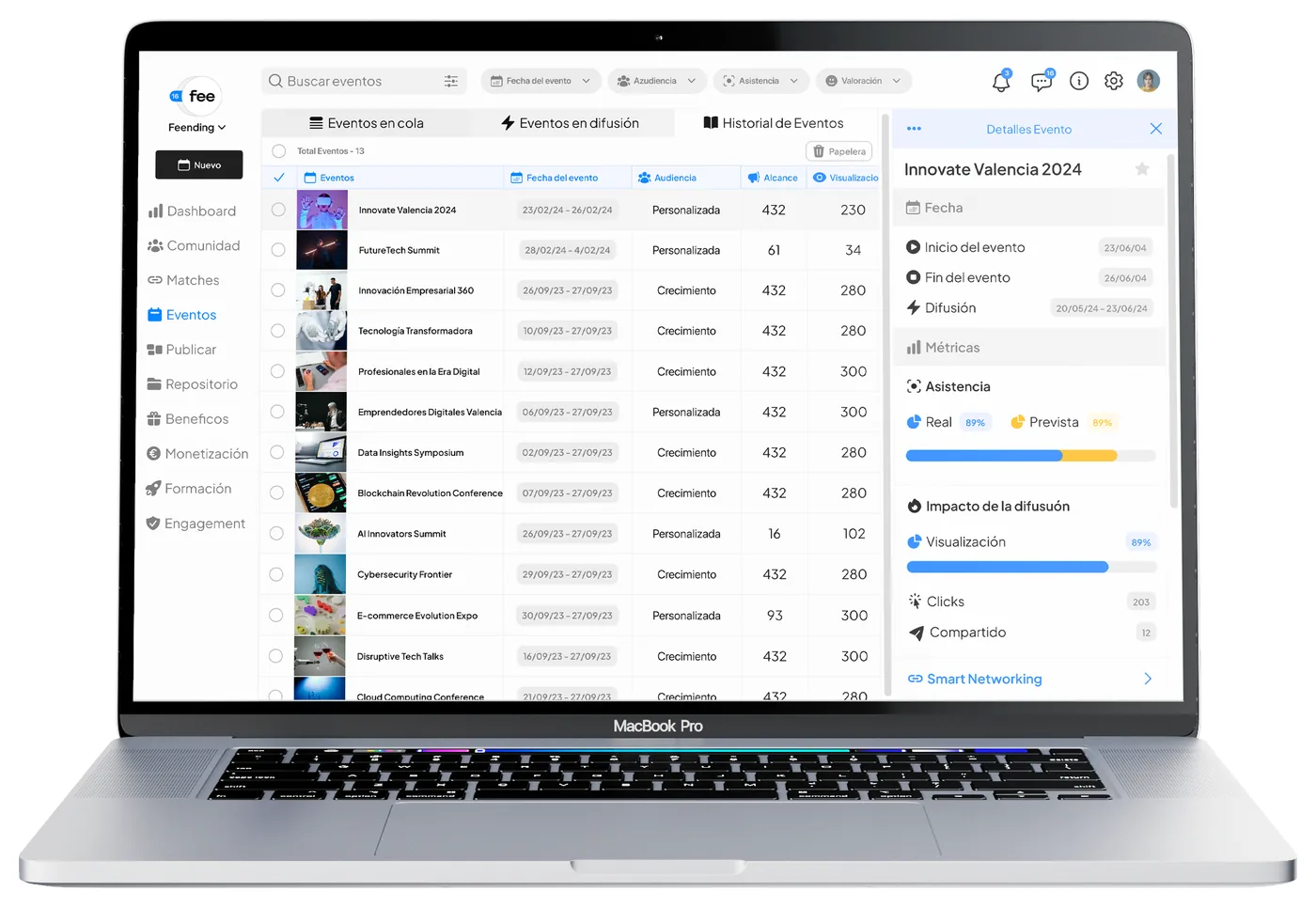
Engagement is not limited to digital content. Organising events is one of the most effective ways to reinforce participation and belonging, and the events module lets you do it in a structured way: online, in-person or hybrid events, registration management, payment, e-tickets, validation of real attendance and ice-breaker dynamics with SmartNetworking. Events activate the community at a specific moment and extend the interaction afterwards; human beings need physical contact to form deep bonds. Impact Social Cup went from running its events across scattered channels to doing it from a single place, twice as efficiently.
4. Offer training and mentoring
A community that learns together grows together. Engagement includes training, workshops, webinars and practical sessions, recorded or live. And the mentoring module personalises learning by connecting the most compatible mentors and mentees with AI. This approach multiplies perceived value and reinforces active involvement: whoever receives mentoring usually ends up giving it.
5. Share useful resources
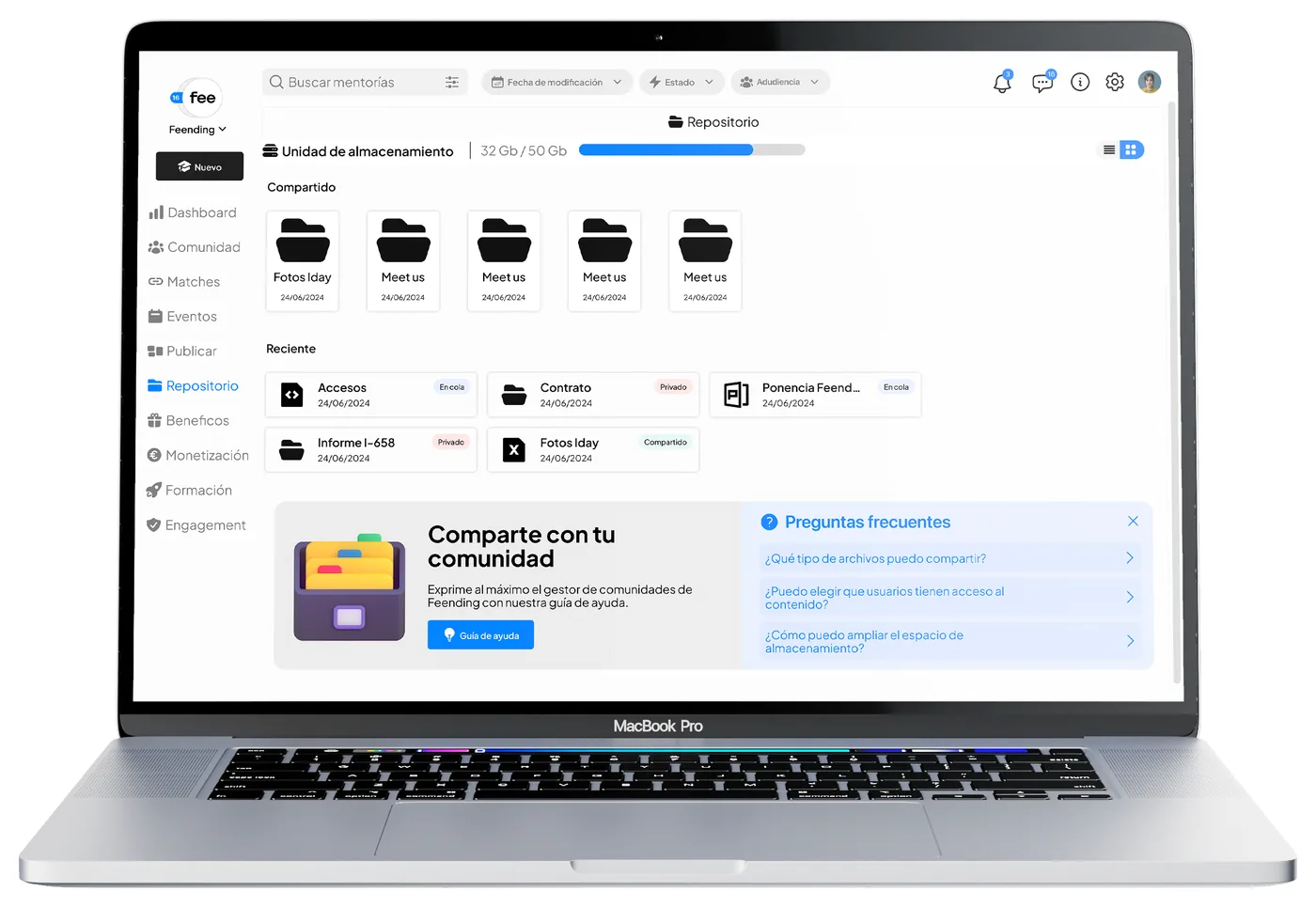
Making high-value, exclusive material accessible is another lever: Feending lets you create folders in a shared repository where members access documents, guides, templates, videos, tools and reports. Resources can be segmented by profile or membership level, which adds order, relevance and personalisation — and lays the ground for monetisation, because access to certain resources is one of the things a member pays for.
Why is engagement not improvisation?
Because the most common mistake is depending on the initial push or on the managers' constant effort, and that doesn't scale: when the manager tires, the community stops.
The Feending Method proposes structured engagement, supported by technology, that lets activity scale without losing quality or coherence. With the right modules active you don't just engage: you multiply real opportunities for connection and growth, and you achieve the most important thing, retention, by creating a deep sense of belonging. The sign that it works is what the Analysis block measures: what share of the activity is started by members rather than by the organisation.
What does engagement do for the community?
It turns participation into a habit, interactions into opportunities and the community into a useful, attractive space. It is how the member perceives the value promised in ideation.
That is why it matters so much to give each person what they are really looking for, and that takes two things: segmentation and a tool with enough information about each user to build good profiles. A community is not built on good intentions alone, but on experiences worth living. And when it is alive, the value is felt… and so is the commitment. If you want six concrete tactics to raise participation, continue with this blog article.
Frequently asked questions
What does it mean to engage a professional community?
It means keeping it moving with dynamics that bring real value: relevant content, connections between members, events, training and resources. It is not posting for the sake of posting; it is giving each member reasons to come back and take part.
Which engagement lever is most effective?
Events, because they combine several at once: a concrete reason to join, contact between people and a shared experience that extends the interaction afterwards. But without content and networking between events, the community goes cold in between.
How much activity does a community need to be "alive"?
There is no figure; the sign is not the volume but who starts it. A community where a growing share of the activity is started by members — a question, an event proposal, an introduction — is alive even if it posts little. One where the manager posts everything is an audience with a good response rate.
What is intelligent networking or matchmaking?
It is connecting members by their interests, goals and compatible profiles using AI, instead of leaving them to meet by chance. It serves professional networking, mentoring, jobs or investment, and it is what turns an information community into one that produces relationships.
Want to see how it applies to your community?
Tell us what your community looks like and we will show you how similar ones do it with Feending.