Business club: what it is, types and how to run it in 5 steps
6 min read

Written by Borja MartosCMO & Co-Founder
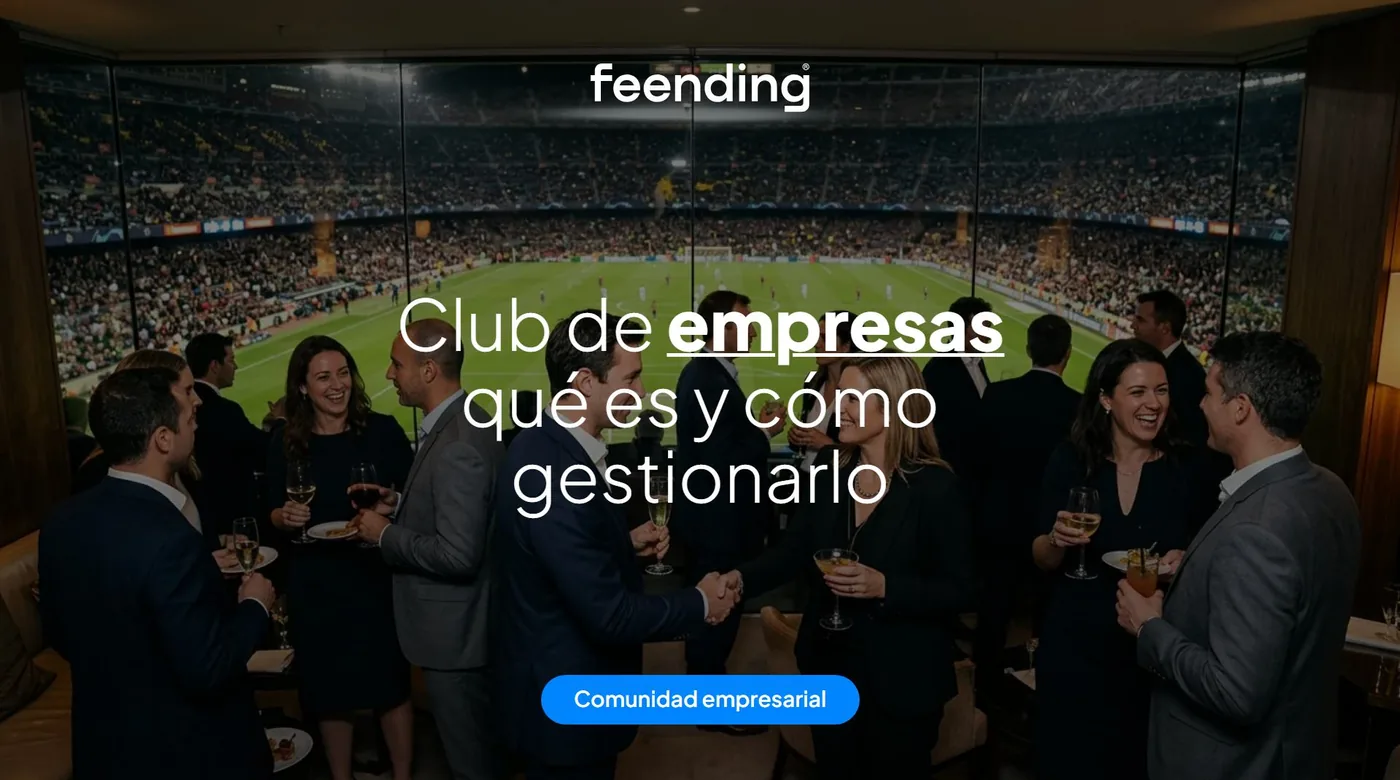
A business club is a network of companies brought together by an organization, such as a sports club, a chamber of commerce, a business association or a large corporation, so they can do business with each other, gain visibility and share events. It works when members know each other and collaborate, not just when they pay the fee.
Many business clubs start strong and stall in their second or third year. Not for lack of members, but because management stays in a spreadsheet, events have no follow-up and companies barely interact with each other. In this guide you will see what a business club is, which types exist, what member companies get out of it and how to run one well in five steps.
What is a business club?
A business club is a business and networking community made up of companies that share a common bond: a badge, a region, an industry or an organization that brings them together. The organization behind it provides the brand, the calendar and the venues; member companies bring their network, their expertise and their business opportunities.
It differs from a sponsorship program in that value does not only flow from the company to the organization. It also flows from company to company. A sponsor buys visibility; a business club member buys access to a network of other companies to do business with.
What types of business clubs are there?
There are four main types, depending on who runs them.
1/ Sports club business clubs. Football, basketball and other sports teams that bring together the companies that support them. The badge and the stadium are the hook: hospitality boxes, matches and events with the club. We cover this in how football clubs are turning their business network into a professional community.
2/ Chamber of commerce clubs. They group the companies in a region to share training, services and access to institutions.
3/ Business association clubs. Industry associations, clusters or executive networks that organize their members as a club, with meetings, working groups and perks. If that is your case, see our guide to tools for business associations.
4/ Supplier or customer clubs of a large company. An anchor company gathers its ecosystem (suppliers, distributors or customers) to innovate and do business together.
What do member companies get from a business club?
They get four things: networking, visibility, business and events. If any of the four fails, the member starts wondering why they are paying the fee.
1/ Networking. Meeting executives and companies they would otherwise rarely cross paths with.
2/ Visibility. Linking their brand to the organization's and getting known among the other members.
3/ Business. Finding customers, suppliers or partners inside the club, with the trust that comes from belonging to the same network.
4/ Events. Access to meetings, matches, conferences and training sessions that are valuable in themselves and act as meeting points.
Of the four, business between members has the most weight in renewals and gets the least attention. Everyone assumes it will happen over drinks after the event.
Why do so many business clubs stall?
They stall because they are run as a list of sponsors rather than as a community. The symptoms are almost always the same.
1/ Everything lives in a spreadsheet. Each company's details, contacts and fees sit in sheets that get copied, duplicated and go out of date. Every time data is moved, there is another chance for mistakes. We cover this in how to manage members without Excel.
2/ Events without follow-up. Events happen, but invitations, RSVPs and attendance are tracked by hand. Afterwards, nobody knows for sure who came, who did not and who should be invited again.
3/ Members who do not know each other. Hundreds of companies share a club, yet each one only deals with the organization's staff. Relationships between them depend on the luck of sitting at the same table.
4/ No data for renewals. When renewal time comes, the manager cannot show each member what they got out of the club that year.
How do you run a business club in 5 steps?
You run it well by treating it as a professional community: a clear value proposition, clean data, measured events, connections between members and renewals based on results.
1/ Define the value proposition. Write in one sentence what a company gains by joining your club and which kind of company it is for. That sentence should drive events, fees and communication. The ideation stage of the Feending Method helps you pin it down.
2/ Build a living database. One record per company and per contact person, with their industry, what they offer, what they are looking for and their history in the club. Letting each member update their own details saves the manager from chasing emails.
3/ Plan an event calendar with attendance tracking. Invitations, registrations, check-in and attendance in a single system. That way you know which formats work, which members take part and which ones are drifting away.
4/ Suggest member-to-member networking with AI. A directory where everyone searches on their own is not enough. An AI that knows each company's profile can suggest who to meet to sell, buy, collaborate or hire, before and after every event. We explain it in how smart networking works.
5/ Measure and renew. Event attendance, connections made and each member's engagement. With that data the renewal conversation changes: you no longer ask members to trust you, you show them what they got. Our guide on how to measure the impact of a professional community can help.
How does Levante UD run its Business Club?
The Levante UD Business Club brings together around 400 companies and moved from managing them in Excel to a single platform. Before, moving data between spreadsheets caused errors and every event meant a lot of manual work to handle invitations and attendees.
With Feending the club centralized the management of its member companies, automated processes that used to be done by hand and keeps better control of its events and who attends them. Read the full Levante UD Business Club case study.
What does Feending bring to a business club?
Feending is a private, unique platform for each club, with a website and app under the club's own brand. It works for the manager and for the member: the club's team has every company, contact, fee and event in one dashboard, and each member gets a personalized experience.
Its AI builds a profile of every member and suggests who to meet across five dynamics: networking, mentoring, sales, investment and hiring. It also brings together communication (chat, email and a community feed), resources, sponsorships and a marketplace where members can offer their services to each other. It is the platform to connect companies that a club needs when it wants to generate business, not just meetings. See it in detail in Feending HUB and in our guide to networking platforms.
Frequently asked questions
What is a business club?
It is a network of companies gathered around an organization, such as a sports club, a chamber of commerce, a business association or a large corporation, to network, gain visibility, do business with each other and take part in events.
What are the benefits of joining a business club?
Access to other executives and companies, brand visibility alongside the organization, business opportunities within a trusted network and members-only events.
How do you manage a business club?
With a clear value proposition, an always up-to-date member database, an event calendar with attendance tracking, member-to-member networking suggested by the platform and metrics to prepare renewals.
What tool should you use to manage a business club?
A private platform that combines the member database, communication, events, fees and networking between members. A spreadsheet is fine to start with, but with hundreds of companies it leads to errors and a lot of manual work, as Levante UD found.
Turn your business club into a business community
If you want your member companies to get to know each other, do business together and renew, Feending is the private, unique platform for your club. Request a free demo.
![Alumni network: what it is and how to build yours [2026]](/assets/red-alumni-que-es-como-crearla-BsL-bTqn.webp)