Monetisation is the fourth block of the Feending Method: making the community sustainable from the value it already creates. It has three routes — paid events, tiered memberships and sponsorships — and one rule: if the value is real, members are willing to pay for it and brands want to be near it. Monetising is not just charging; it is recognising and sustaining the impact being generated.
Almost every professional community lives on someone else's budget: the university's, the association's or the department's that sponsors it. And almost all of them discover, sooner or later, that the budget gets cut in the year it is needed most. A community that generates no income of its own depends on someone outside continuing to believe in it.
The monetisation block of the Feending Method exists so that the community can stand on its own. It comes after engagement for a reason: you can only charge for what is already worth something, and only what is alive is worth something. Trying to monetise a cold community is the surest way to empty it.
What is monetisation within the Feending Method?
It is turning part of the value the community creates into income that sustains it, ethically and in proportion to that value. Sustainability with purpose: the money serves to keep the community going and improving, not the other way round.
The premise is simple: if you create real value, the community will be willing to pay, and brands will want to take part too. Feending makes it possible with an integrated payment gateway (Stripe), so charging for an event, a fee or a membership requires nothing to be set up separately.
What are the three routes to monetisation?
Paid events, memberships and sponsorships. They can be combined, and you almost always start with the first because it is the easiest to explain and asks for the least commitment.
1. Paid events
If the event brings value, you can charge for it. And you should, even if it is little: even small amounts reinforce commitment. At a free event a large share of registrants never show up; a token price visibly reduces that, because whoever pays turns up. The events module handles registration, payment, the e-ticket and validation of real attendance in the same flow. And the paid event is the best first step towards membership: whoever has paid for three events understands without explanation what an annual plan is.
2. Memberships
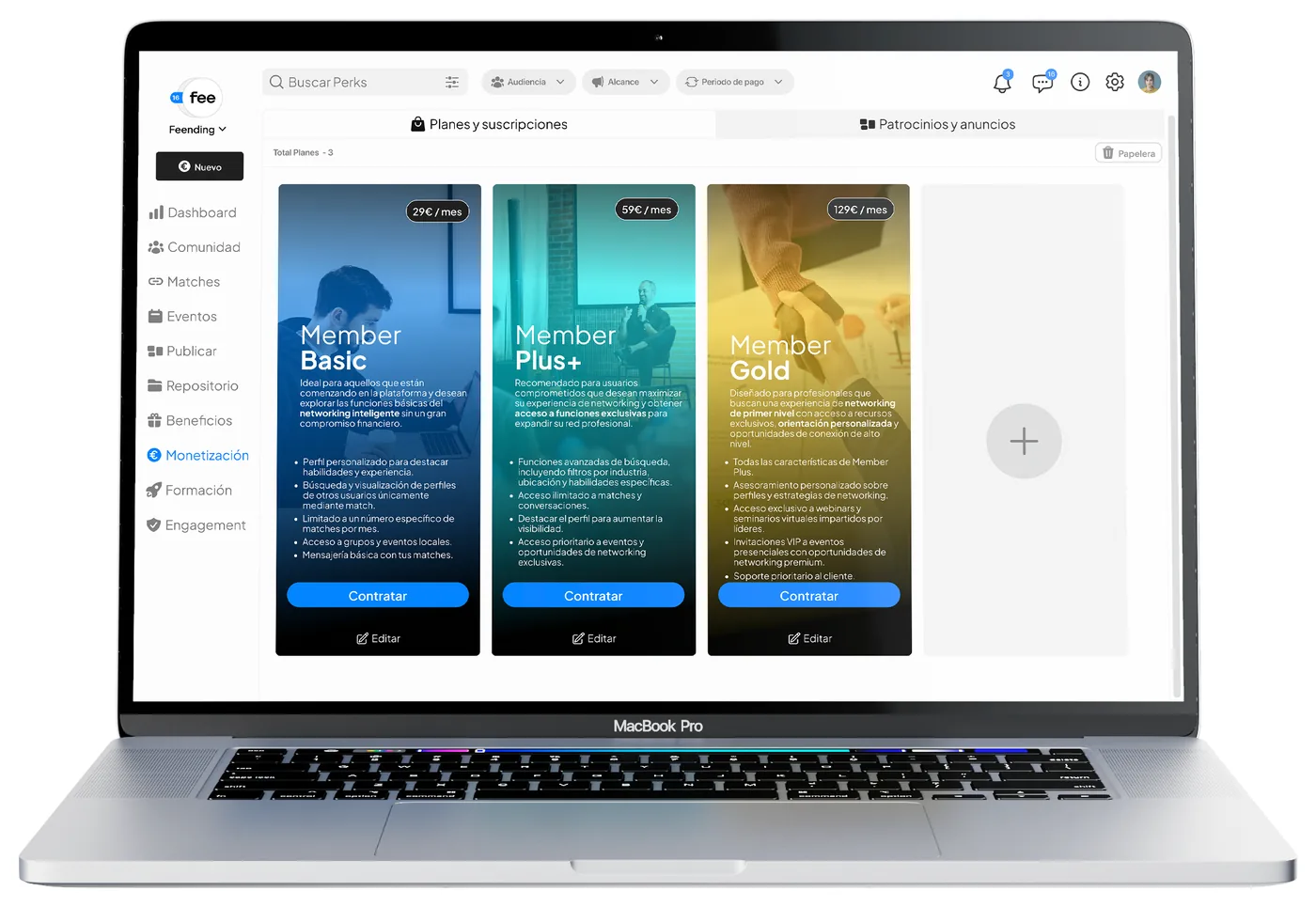
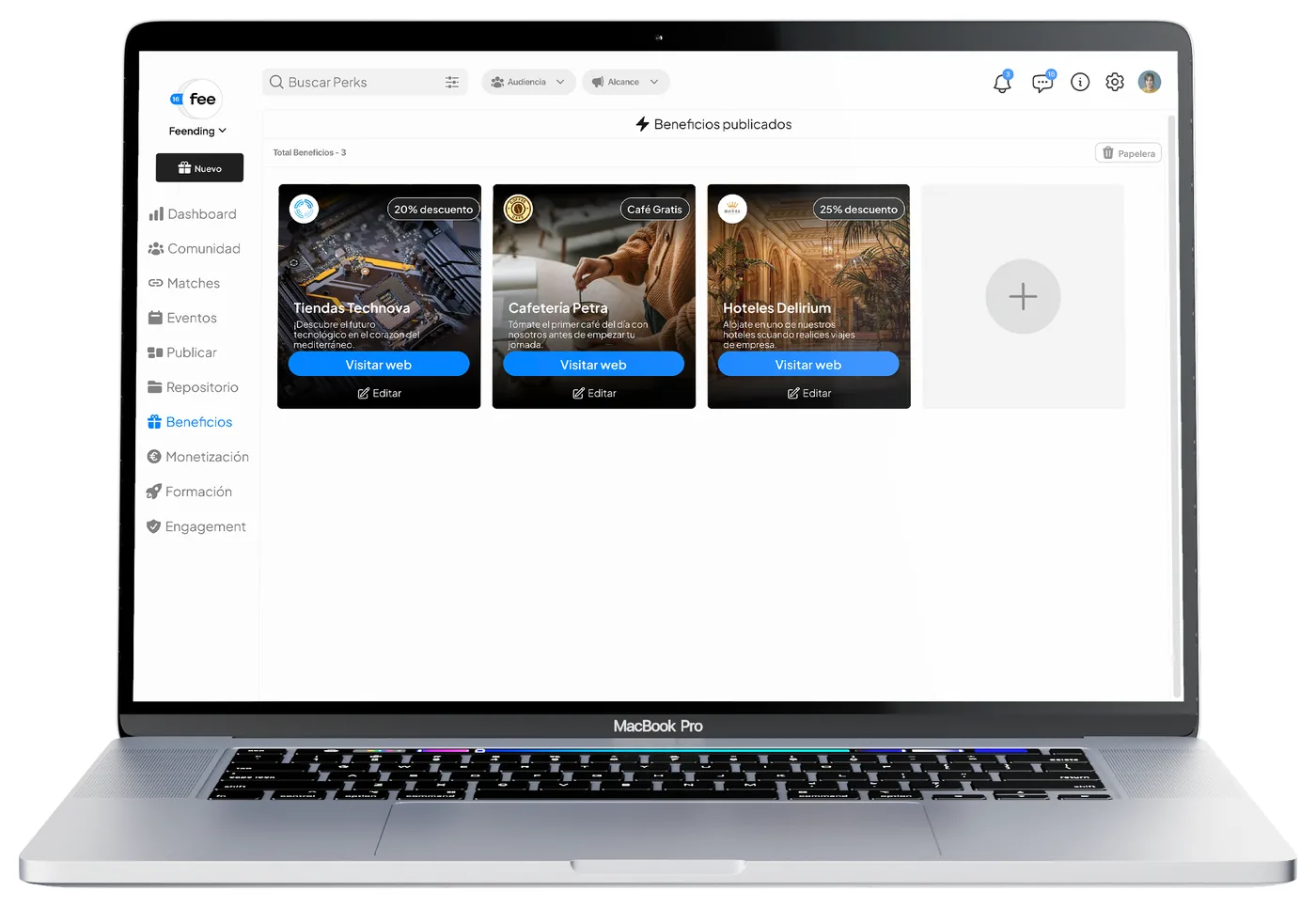
Different plans — free, basic, premium — with progressive access to benefits and services. The free plan grants belonging; the paid ones grant what engagement has built as valuable: access to certain resources, priority at events, mentoring, advanced networking, exclusive perks such as partner discounts and offers. The key is that each tier has something the one below doesn't, and that this something is what members have already shown they use. The monetisation module manages plans, fees and renewals.
3. Sponsorships
Thanks to the valuable information the community produces about its members — who they are, what interests them, what they attend — you can attract brands that want to reach that audience. A sponsorship can be visibility, qualified lead generation, or support for a cause or social mission of the community. It is the route with the most potential and the one that demands the most care: a brand adds value if its presence is valuable to members, and subtracts if it is noise. The data from the Analysis block is what lets you sell a brand not "3,000 contacts" but "800 healthcare professionals who attend events".
When can you start monetising?
When the community already proves its value with data: events that fill up, resources that get downloaded, connections that happen. Before that, charging is asking for faith.
A practical rule: if recurrence is rising in the analysis block — those who came come back — there is something people are willing to pay for. If it is falling, fix engagement first. And start small: one event at a token price, one premium plan with a single clear benefit, one sponsorship for a single event. Each teaches you something about what your community values, which is exactly what you need to know for the next one.
Why is monetising not just charging?
Because the price also communicates: it tells the member that what they receive has value, and it tells the organisation which parts of the community truly have it. It is recognising and sustaining the impact generated.
A community that charges for what it is worth has more committed members — they have decided to be there, not just to sign up — managers with a budget to keep improving it, and clear data about what works. And one that does it with purpose, reinvesting in the community and supporting causes it cares about, turns the charge into part of its identity rather than a toll. How that return is calculated, in numbers, is explained in this blog article.
Frequently asked questions
Can an alumni community or an association be monetised?
Yes, and it is the norm: paid events, a tiered membership fee and sponsorships from companies that want to reach that group. What changes compared with a commercial community is that the income is reinvested in the community, and that needs to be said.
How much should you charge for a community event?
Enough that whoever signs up turns up, not so much that they stop signing up. In practice, between 5 and 30 euros for a two-hour event; more if it includes training or a meal. A small price visibly reduces the registrations that never attend.
What is the difference between a membership and a member fee?
None in the mechanics: it is a recurring payment in exchange for belonging and benefits. The difference lies in the tiers: a well-designed membership has a free plan that grants belonging and paid plans that grant progressive access to what the community has built as valuable.
What does a brand need to sponsor a community?
Data: knowing who the members are, what interests them and what they attend. A sponsorship sells with "800 professionals in this sector who go to events", not with "3,000 contacts". That is why sponsorship monetisation depends on the analysis block.
Does Feending take a commission on community payments?
Feending integrates a payment gateway (Stripe) for events, fees and memberships; the specific terms of each plan are on the pricing page.
Want to see how it applies to your community?
Tell us what your community looks like and we will show you how similar ones do it with Feending.