The Feending MethodGuide 3
Communication: conveying the value before and after sign-up
7 min read
Communication is the second block of the Feending Method and its job is to convey the community's value before and after sign-up: explaining what it is, what being inside is for and how it is used. It starts with the invitation, not the welcome; it uses a different channel for each kind of message; and it segments, because sending everything to everyone is the fastest way to make people stop reading.
A community does not start when someone registers. It starts much earlier, the moment that person receives an invitation and decides whether it is worth it. In an environment saturated with messages, invitations and platforms, communication is what determines whether someone understands the value of belonging… or ignores it.
That is why, within the Feending Method, communication is not an add-on: it is the block that connects ideation with real participation. A well-designed but poorly communicated community has low conversion, weak commitment and disoriented members who don't know what to do once inside.
What is communication within the Feending Method?
It is constantly answering the three questions any member asks: what is this community, what is being here for, and how is it used. It is not informing: it is conveying value.
The goal is concrete: improve the conversion rate from invitees to members, make initial activation easy and lay the foundations for participation aligned with the purpose defined in ideation. When communication is confused or absent, even the best-designed communities lose traction.
Why does communication start before sign-up?
Because the decision to join is taken with the invitation, and the first impression is spent there. One of the big mistakes is assuming that the explaining starts "once inside"; in reality, the most important communication happens before someone decides to join.
When you invite someone to your community, they need to understand four things clearly and attractively: what the community is (the community as a concept, not the tool), what its value proposition is, what real benefits they will get and how they will get them — and here, only here, does the platform appear.
The Feending Method proposes four resources to achieve it, and they work better combined than alone:
- An explainer video, simple and direct, under two minutes.
- A welcome document that sums up the purpose and what is expected of each member.
- An interactive onboarding inside the platform, guiding the first steps.
- An in-person or webinar training session, especially in communities whose members are not digital natives.
These elements don't just inform: they build trust and reduce the friction of joining, which raises the odds that a user gets active from the first moment instead of registering and never coming back.
How do you communicate once inside?
With clarity and consistency, and without stopping: the communication work doesn't end with sign-up, that is where the most important part begins. You have to keep telling the what, the what-for and the how, or the member is left with the feeling of an "empty platform".
The Feending Method puts the emphasis on three things.
1. A channel for each message
Not all communication should go through the same channel, and mixing them is what saturates. Feending structures communication so that it is clear and not intrusive:
- Mailing: structured, targeted communication, for what must be read.
- Newsletter: the period's highlights, in a single send.
- Wall: posts visible to the whole community, for what can be read in passing.
- Chat: direct or group messages, for what is a conversation and not an announcement.
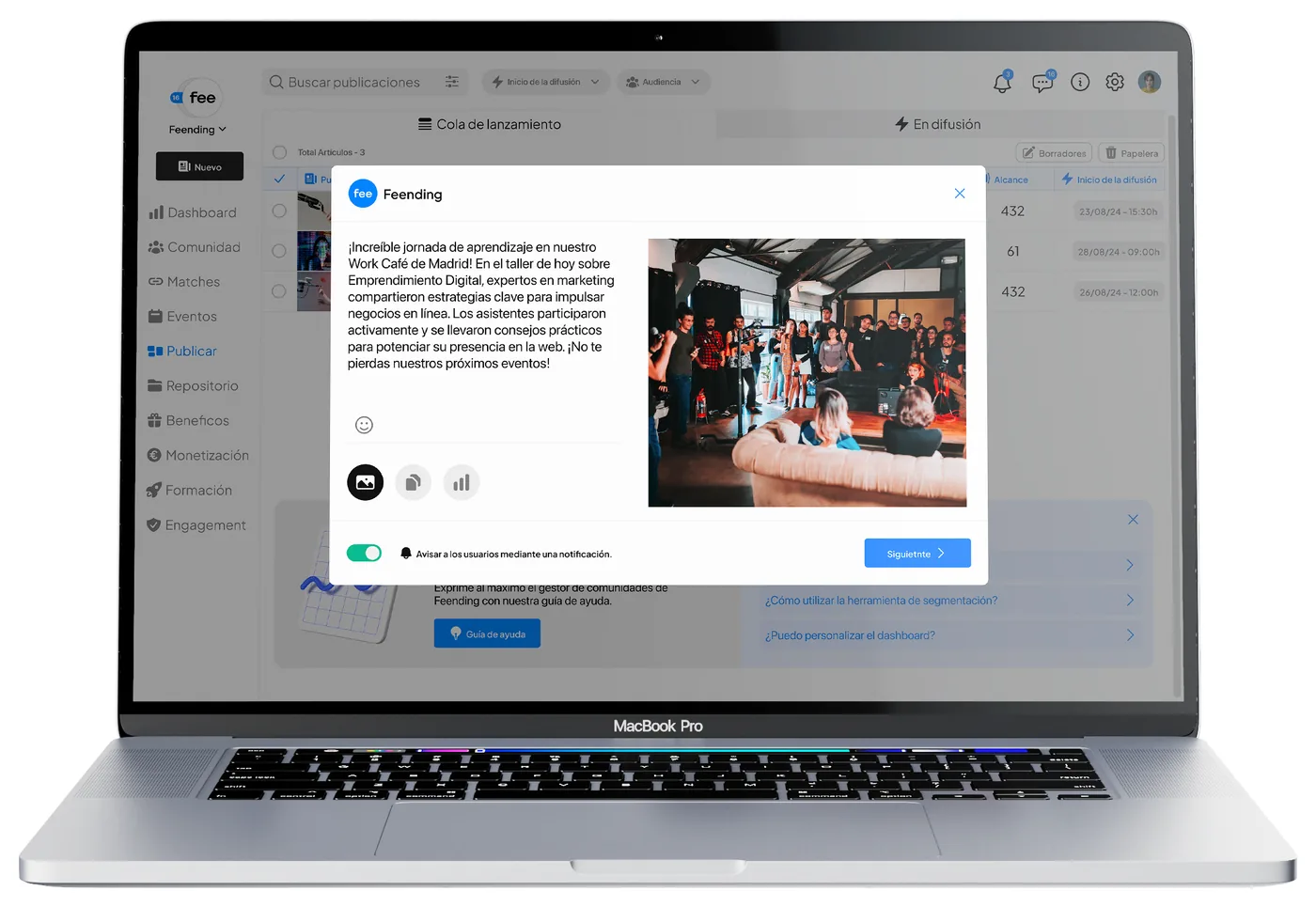
This differentiation avoids saturation and improves the quality of each interaction. An important notice in the chat gets lost; a conversation by mailing annoys. In Feending's communication module the four channels live together and the manager decides which one to use for each message.
2. Segment: just enough, to whoever needs it
Sending "everything to everyone" is the most common mistake in digital communities and the hardest to undo, because once people learn that your emails are not for them, they stop opening them. Segmenting by interests, roles or activity level lets you send the right message to the right person: it improves response rates, increases relevance and reinforces the feeling of a personalised experience. It is what allowed UCAM Alumni to move from generic campaigns to reaching each class year with what interests them, five times faster.
3. Train the users
The better members understand how the platform works and what they can do on it, the more they take part. That is why the method recommends offering content, sessions or webinars that explain how to use the community and its tools. Training is not lost time: it is a direct investment in commitment, and it is usually what separates a community where forty people take part from one where four hundred do.
Why does communication make the difference?
Because it turns a good idea into an understandable, actionable experience: users grasp the value quickly, initial participation rises, early drop-off falls and trust is built from day one.
A community that communicates well doesn't need to keep pushing its members: it accompanies them, guides them and gives them clear reasons to stay. Because when people understand why they are in a community, they truly begin to be part of it. From there, the work is keeping it moving: that is the next block, Engagement. If your community still communicates over WhatsApp, this article explains why it ends up being a problem.
Frequently asked questions
What should an invitation to a professional community say?
Four things, in this order: what the community is, what its value proposition is, what concrete benefits the invitee will get and how they will get them. The tool appears only in the last one; if the invitation opens with the platform, nobody understands why to join.
Which channel should be used for each message?
Mailing for what must be read, newsletter for the period's summary, wall for what can be seen in passing and chat for conversation. Mixing them — an important notice in the chat, a conversation by email — is what makes people stop paying attention.
How often should you communicate with the community?
Less than you think and more segmented: one newsletter a month, mailings only when there is something that person needs to know, and a wall with constant activity. Frequency matters less than relevance: one useful email a week gets opened; three generic ones don't.
Why segment communication?
Because sending everything to everyone teaches members that your messages are not for them, and once learned, they stop opening them. Segmenting by interests, roles or activity makes each message reach whoever it matters to, which raises responses and lowers unsubscribes.
Want to see how it applies to your community?
Tell us what your community looks like and we will show you how similar ones do it with Feending.