Managing a professional community is not just about bringing people together under the same name or common interest. A well-managed community is a living system that connects its members, generates real opportunities, and creates sustained value over time. When this does not happen, communities tend to dissolve, lose participation, and end up over-relying on individual efforts.
There are many types of professional communities, from business associations and alumni networks to business clubs, foundations, accelerators, or hubs, but most share the same challenge: defining a clear strategy and advancing their digitalization. This involves deciding what kind of impact is sought, what experiences are to be generated for the members, and what technology is necessary to facilitate the management and growth of the community.
An effective management starts with having a clear purpose. Communities that work are those in which members understand why they are part of them, what they can contribute, and what they can get in return. Without purpose, there is no engagement, and without engagement, there is no community.
A professional community is a group of people who share a common purpose—professional, educational, or personal development—and who relate continuously to generate knowledge, opportunities, learning, and valuable relationships.
Managing a professional community involves designing a system that allows its members to connect, stimulates participation, and measures the real impact of those interactions.
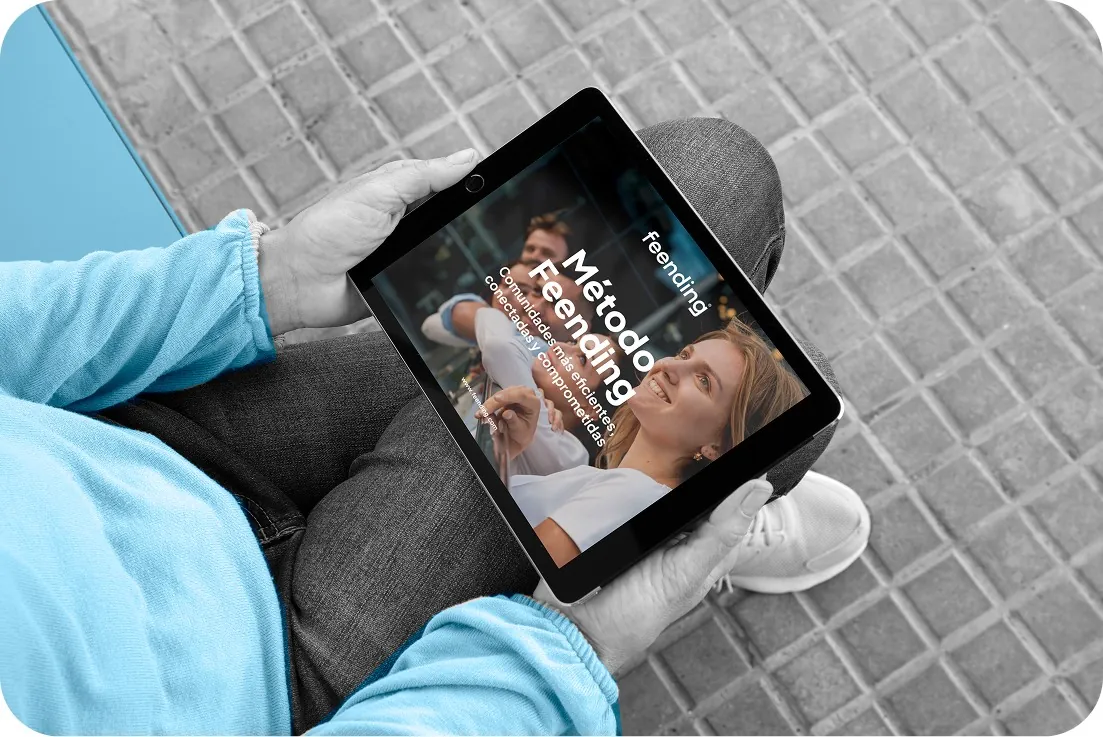
Here you can learn more about our "Feending Method" 👉🏼 DOWNLOAD
One of the common big mistakes is trying to manage professional communities with tools that are not designed for that: WhatsApp groups, bulk emails, or isolated documents. These solutions may work in an initial phase, but they do not scale and do not allow measuring the real impact of the community.
It is at this point that specialized platforms for managing professional communities come into play, such as Feending, which allows the manager to centralize and energize the community from a single environment.
The Feending software facilitates the creation of profiles, the organization of events, the management of groups, opportunities for employment and memberships, as well as generating relevant connections among members, while providing key data to understand what is happening within the community and make better decisions.
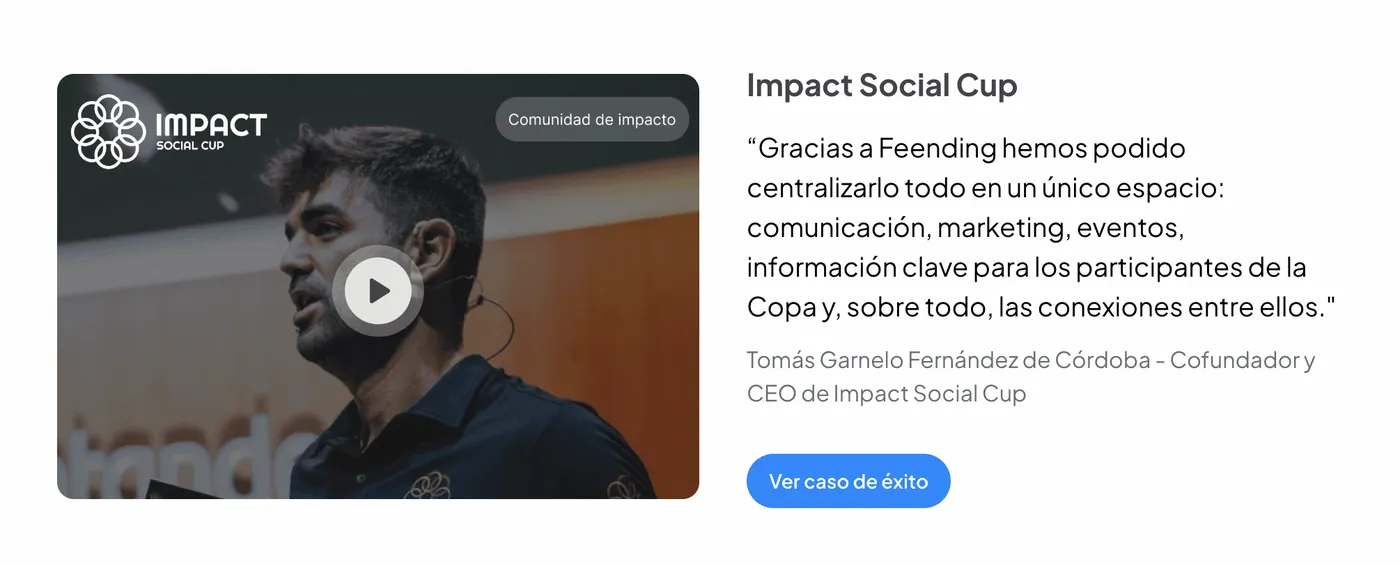
A clear example is Impact Social Cup, a community that brings together entrepreneurs, investors, and agents from the social impact ecosystem. Thanks to Feending, they were able to centralize communication, events, and connections among participants in a single digital space.
This allowed transitioning from a dispersed community to a connected ecosystem, where professional relationships are created with intention, affinity, and data.
Managing a professional community well involves designing processes, relying on technology, and understanding that value lies in the relationships created among its members.
In summary, managing a professional community effectively requires purpose, technology, and data.
When a community has an appropriate platform, like Feending, it stops depending on individual efforts and becomes a strategic, measurable, and sustainable asset.
![Association management software: what it should have [2026]](/assets/software-gestion-asociaciones-DujLQosD.webp)