How football clubs are turning their business network into a professional community
3 min read

Written by Borja MartosCMO & Co-Founder

For many years, the business model of football clubs relied mainly on three pillars: ticket sales, television rights, and sponsorships.
Today, that model is evolving.
More and more clubs are discovering that one of their most valuable assets is not just on the field or in the stadium, but in their business network: the companies, sponsors, and partners that are part of the club's ecosystem.
In this context, the so-called business clubs are gaining prominence as spaces where professional relationships, business opportunities, and new forms of collaboration between companies are generated.
The business club: much more than sponsorship
Traditionally, many companies approached football clubs seeking visibility or sponsorship.
However, it is becoming increasingly clear that the value of belonging to a business club goes far beyond that.
As Miguel Miró, head of the area at Levante UD, explains:
Many companies join the business club for networking and end up becoming sponsors of the club.
This reflects a reality that many clubs are beginning to understand:
the business club is not just a commercial space, but a professional community where real business relationships are generated.
Connecting business ecosystems between clubs
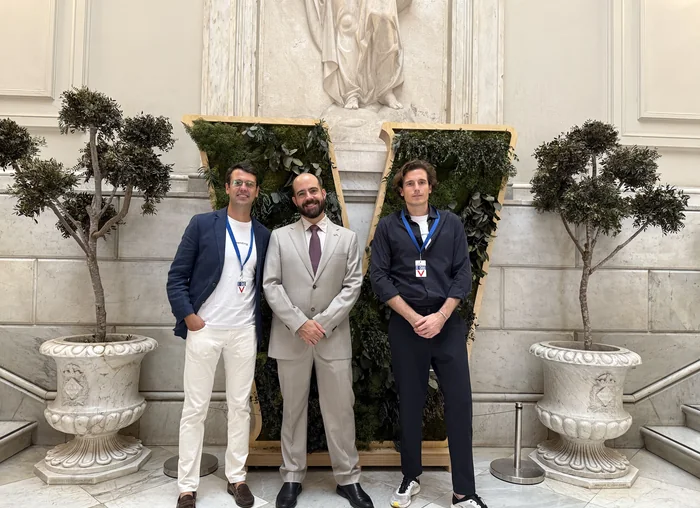
A recent example of this evolution was seen in the meeting organized between the Business Club of Levante UD and Villarreal CF, held at the Ciutat de València stadium.
The purpose of the meeting was clear: to connect the companies that are part of both clubs to generate new opportunities for collaboration and business.
This type of initiative reflects a growing trend in professional football:
clubs are no longer just competing on the sports field, they are also building business ecosystems that add value to their sponsors and partners.
In fact, the initiative even aims to extend this model to more clubs in the future to connect business communities from different territories.
Opening the business ecosystem to more companies
Another important change being driven by some clubs is expanding the profile of companies that participate in these communities.
In the case of Villarreal CF, its director of the Business Club, Mar Llaneza, has explained that the goal is to open the community to SMEs and smaller companies, beyond the traditional weight of the ceramic sector in the province.
This approach responds to a clear idea: the more diverse and dynamic the business ecosystem, the more opportunities for connection and collaboration can arise within the community.
Technology as a driver of business networking
The growth of these business clubs is also driven by the use of technology that allows organizing, energizing, and measuring what happens within these communities.
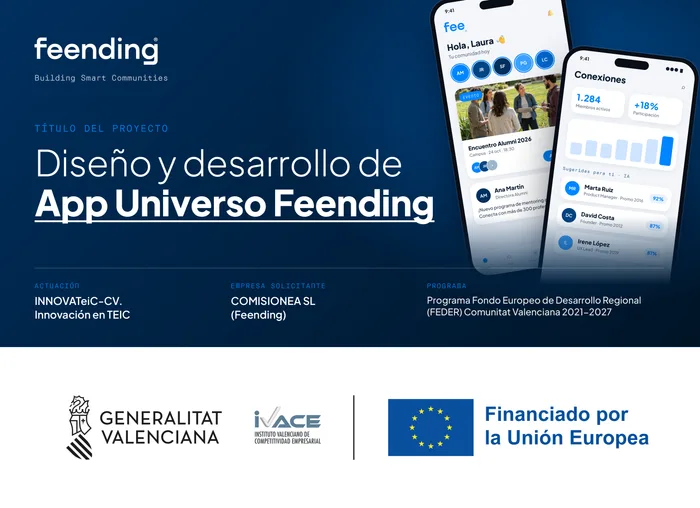
In the meeting between Levante UD and Villarreal CF, the technology of Feending acted as a platform to facilitate organization, communication, and networking among the participating companies.
Instead of limiting itself to organizing singular events, the goal is to create an environment where companies can:
get to know each other better
identify collaboration opportunities
maintain relationships over time
generate value within the club's ecosystem
Football as a platform for professional relationships
This transformation reflects a profound change in the sports industry.
As Mario García-Granero, CEO of Feending, points out:
Football is no longer just about selling tickets; the future lies in enhancing the business of clubs.
Clubs are beginning to understand that their business community can become a strategic asset that generates value beyond traditional sponsorship.
When managed correctly, this network can become:
an active professional community
a real networking space
a source of business opportunities among companies
From sponsors to business community
The true potential of business clubs emerges when they stop functioning as mere lists of sponsors and start being managed as organized professional communities.
At that moment, the club stops offering just visibility and begins to provide something much more valuable: business connections between companies that share interests and goals.
This is precisely the role that technology is beginning to play in this type of initiative.
Conclusion
Professional football is experiencing a silent transformation.
Beyond sports results, many clubs are discovering the value of their business ecosystems and the potential to turn them into genuine professional communities.
When these networks are managed with strategy and technology, the business club ceases to be simply a sponsorship space and becomes a platform for relationships, opportunities, and growth for the companies that are part of it.
In this new scenario, technological solutions like Feending enable clubs to organize, energize, and scale these business communities, facilitating that networking among companies becomes a real source of value for the entire ecosystem of the club.